 AI
AI
 Hướng dẫn AI
 Claude
 ChatGPT
 Gemini
 Prompt
 AI Tools
 Workflow
 Công nghệ
 Học IT
 Tiện ích

Trong quá trình phát triển phần mềm, hiệu suất code luôn là một yếu tố then chốt, ảnh hưởng trực tiếp đến trải nghiệm người dùng và khả năng mở rộng của hệ thống. Tuy nhiên, việc tối ưu hóa không phải lúc nào cũng đơn giản, đặc biệt khi code ngày càng phức tạp và yêu cầu xử lý ngày càng cao.
Sự xuất hiện của các mô hình AI đã mang đến một cách tiếp cận mới: Sử dụng prompt được thiết kế hợp lý để phân tích, phát hiện điểm nghẽn và đề xuất cải tiến hiệu suất một cách nhanh chóng.
Vì vậy, việc xây dựng các mẫu prompt tối ưu hóa hiệu suất code không chỉ giúp tận dụng tối đa sức mạnh của AI mà còn hỗ trợ lập trình viên nâng cao chất lượng và hiệu quả của sản phẩm phần mềm.
Prompt tối ưu hóa hiệu suất code
Điều chỉnh hiệu suất
Phân tích đoạn code này để tìm kiếm các cơ hội tối ưu hóa hiệu suất:

[DÁN CODE]

Các vấn đề hiện tại: [MÔ TẢ CÁC VẤN ĐỀ VỀ HIỆU SUẤT]
Các ràng buộc: [ví dụ: Giới hạn bộ nhớ, Yêu cầu về thời gian phản hồi]

Đề xuất:
- Cải tiến thuật toán
- Tối ưu hóa cấu trúc dữ liệu
- Chiến lược lưu cache
- Truy vấn cơ sở dữ liệu tối ưu hóa
- Phân tích độ phức tạp thời gian/không gian
Phù hợp nhất cho: GPT-5, Claude 4 Sonnet
Kết quả tham khảo thực hiện bằng GPT-5
Phân tích đoạn code này để tìm kiếm các cơ hội tối ưu hóa hiệu suất:

# models.py
from django.db import models
from django.contrib.auth.models import User

class Product(models.Model):
    name = models.CharField(max_length=255)
    price = models.FloatField()

class Order(models.Model):
    user = models.ForeignKey(User, on_delete=models.CASCADE)
    created_at = models.DateTimeField(auto_now_add=True)

class OrderItem(models.Model):
    order = models.ForeignKey(Order, on_delete=models.CASCADE)
    product = models.ForeignKey(Product, on_delete=models.CASCADE)
    quantity = models.IntegerField()

# views.py
from django.http import JsonResponse
from django.contrib.auth.models import User
from .models import Product, Order, OrderItem

def report(request):
    result = []

    # Lấy toàn bộ user (không phân trang)
    users = User.objects.all()

    for user in users:
        user_orders = Order.objects.filter(user=user)

        total_spent = 0
        total_items = 0

        for order in user_orders:
            items = OrderItem.objects.filter(order=order)

            for item in items:
                # Query lại product mỗi lần (N+1)
                product = Product.objects.get(id=item.product.id)

                total_spent += product.price * item.quantity
                total_items += item.quantity

        # Lấy top sản phẩm user mua (logic Python thay vì DB)
        product_count = {}
        for order in user_orders:
            items = OrderItem.objects.filter(order=order)
            for item in items:
                name = item.product.name
                product_count[name] = product_count.get(name, 0) + item.quantity

        top_product = None
        if product_count:
            top_product = max(product_count, key=product_count.get)

        result.append({
            "username": user.username,
            "total_spent": total_spent,
            "total_items": total_items,
            "top_product": top_product
        })

    return JsonResponse({"data": result})

Các vấn đề hiện tại:

❌ N+1 queries nghiêm trọng:
Query Order theo từng user
Query OrderItem theo từng order
Query Product trong vòng lặp
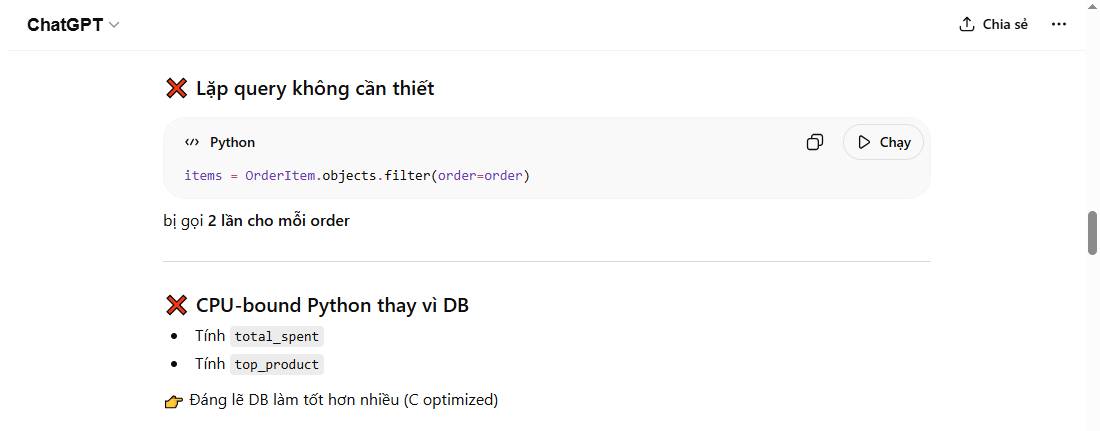
❌ Query lặp lại nhiều lần:
OrderItem.objects.filter(order=order) bị gọi lại nhiều lần
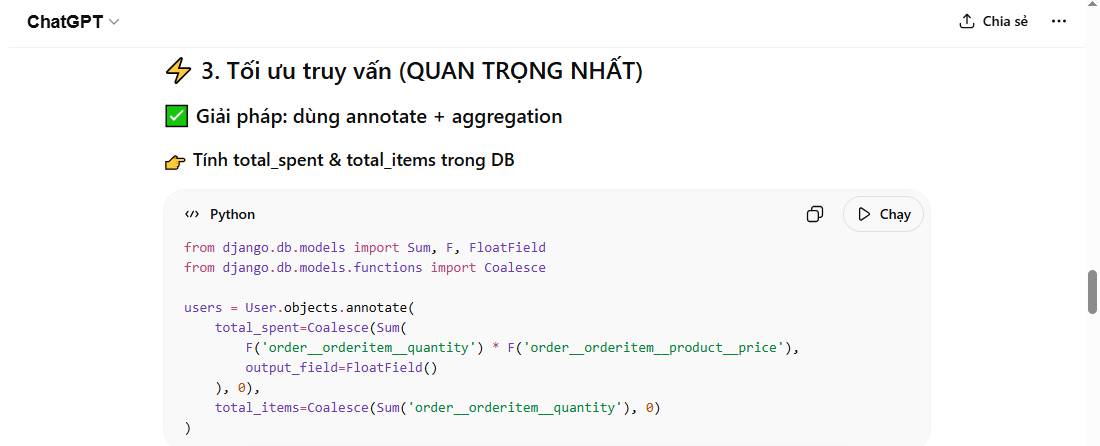
❌ Không dùng ORM hiệu quả:
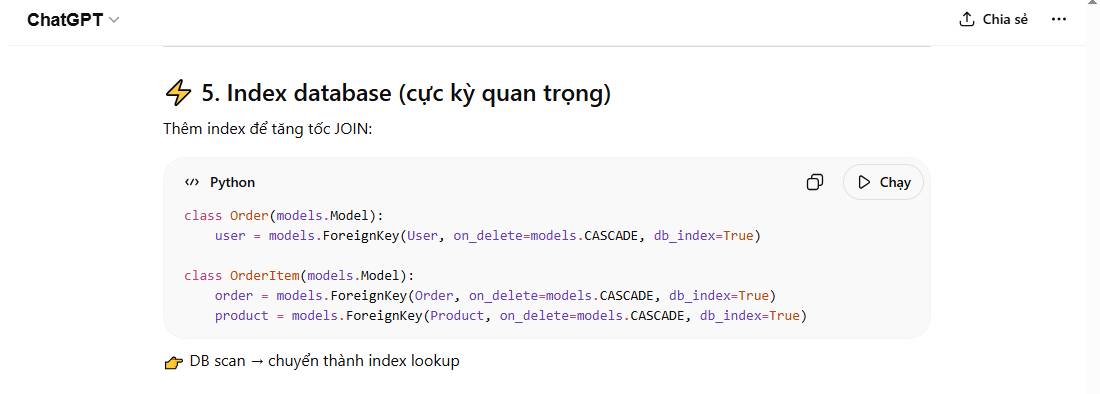
Không dùng select_related, prefetch_related
Không dùng annotate, aggregate
❌ Xử lý nặng ở Python:
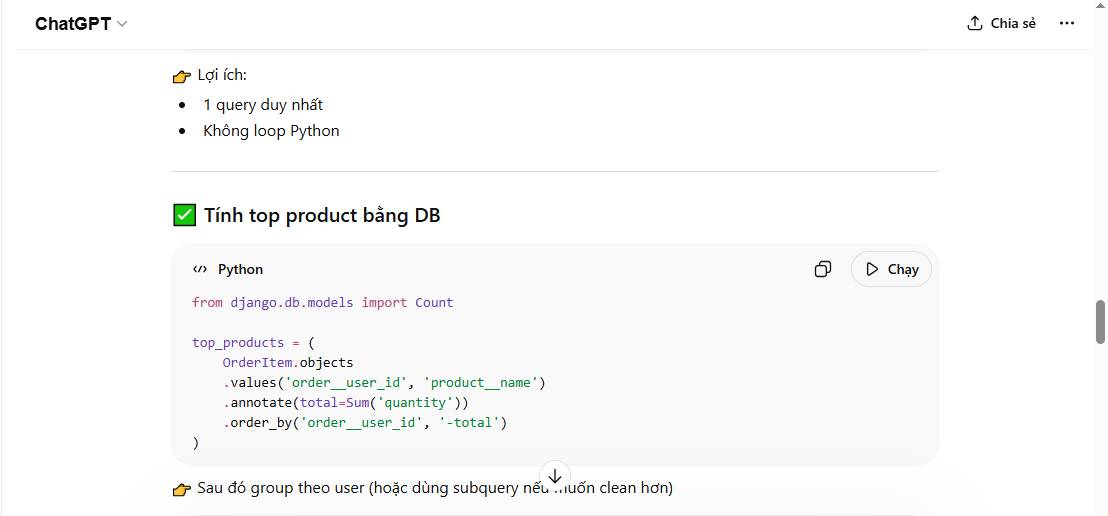
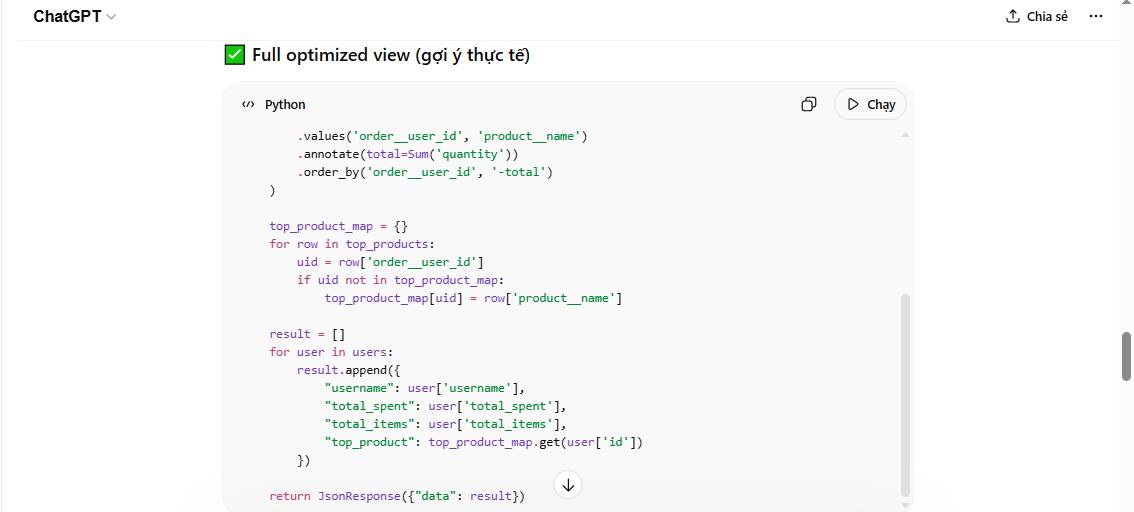
Tính tổng tiền, top product bằng loop thay vì DB
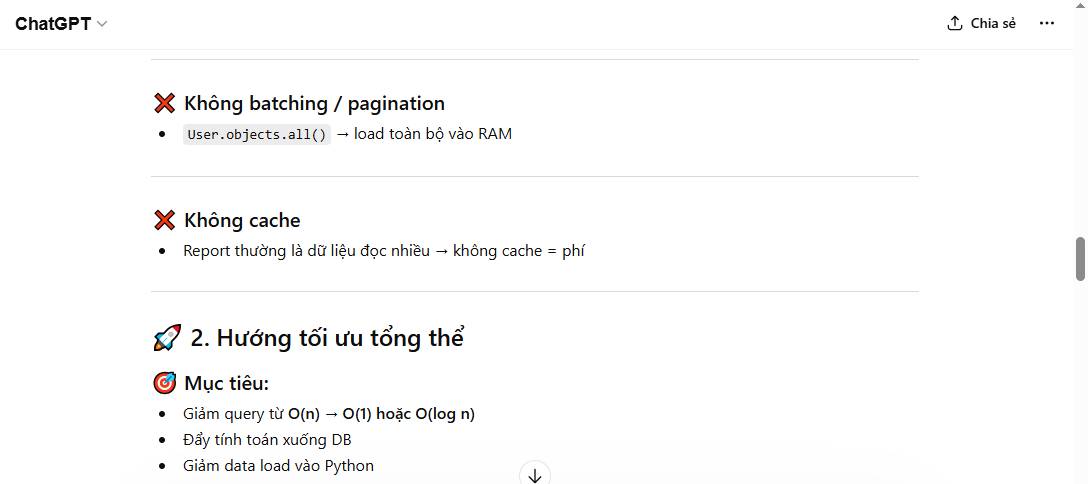
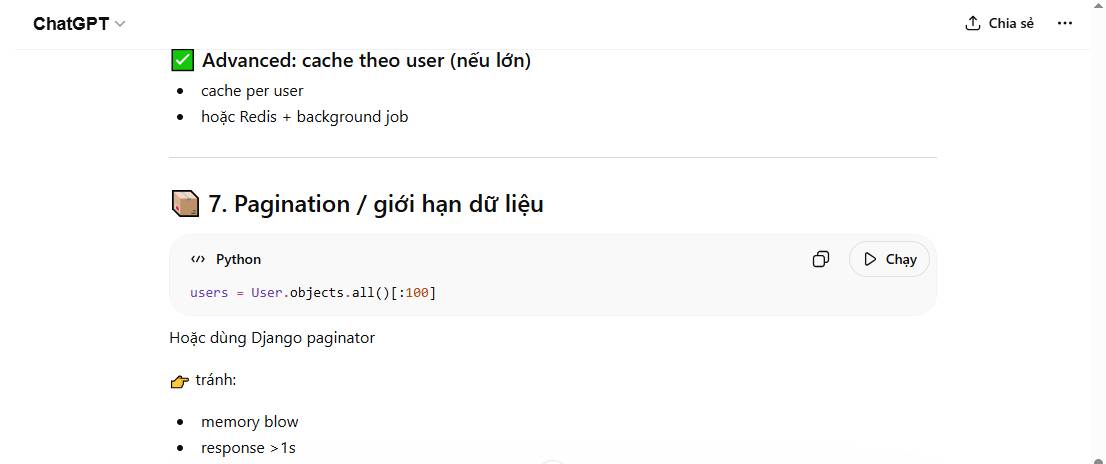
❌ Không phân trang / không giới hạn dữ liệu
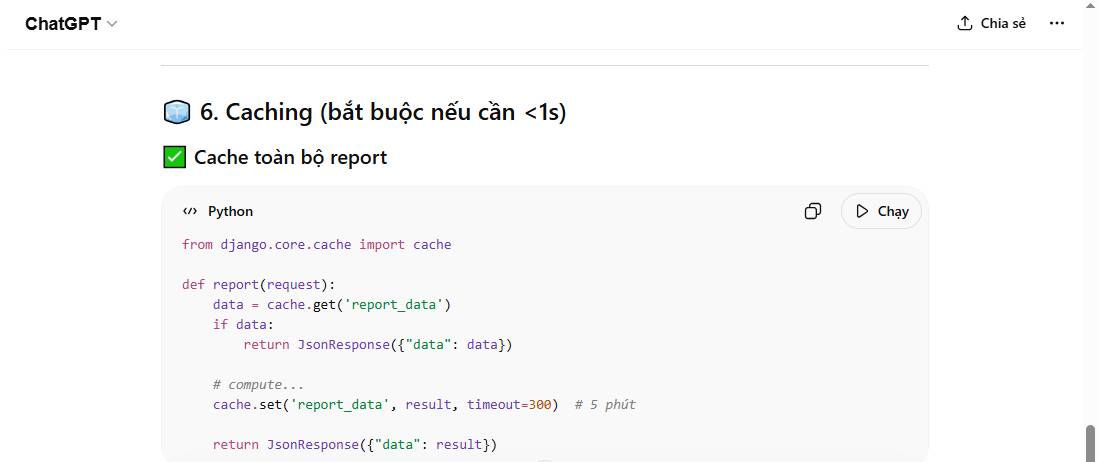
❌ Thiếu caching cho dữ liệu report

Các ràng buộc: Yêu cầu về thời gian phản hồi: 1 giây

Đề xuất:
- Cải tiến thuật toán
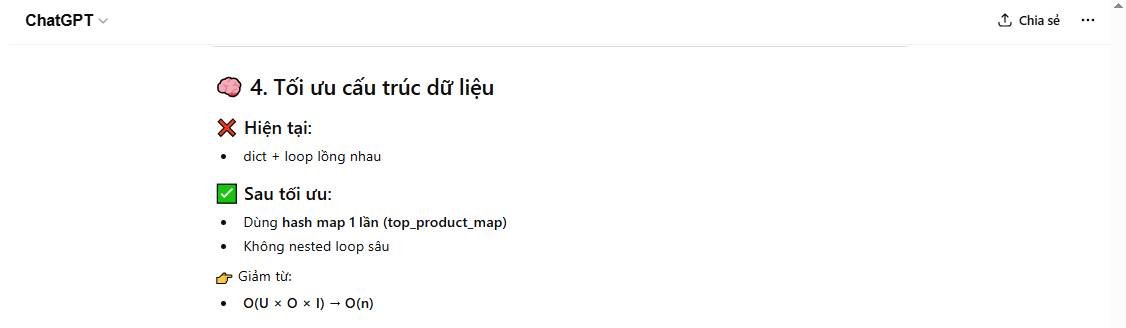
- Tối ưu hóa cấu trúc dữ liệu
- Chiến lược lưu cache
- Truy vấn cơ sở dữ liệu tối ưu hóa
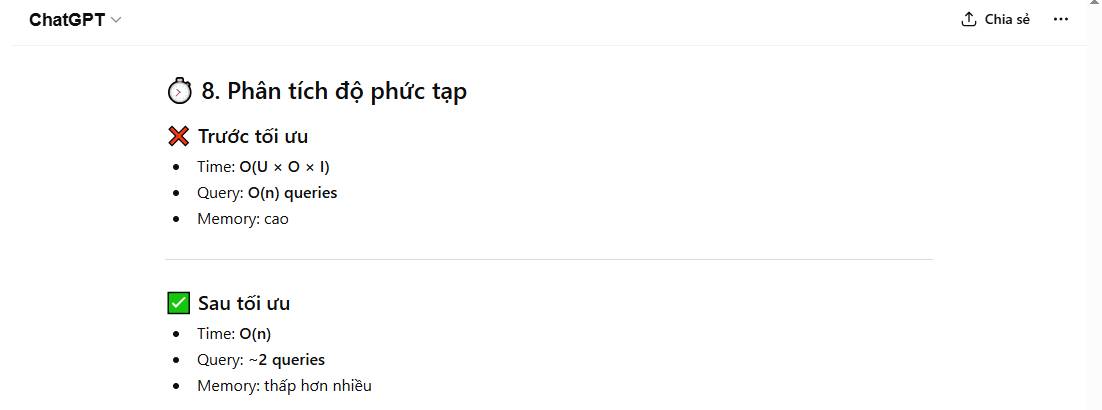
- Phân tích độ phức tạp thời gian/không gian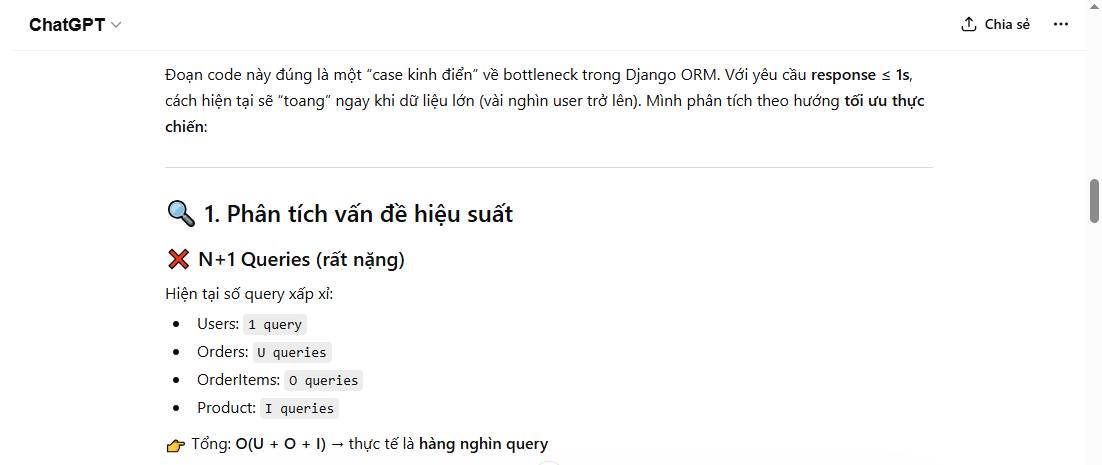






 AI
AI
 Copilot
 Grok
Grok
 Thư viện Prompt
 Hướng dẫn AI
 Công nghệ
 Ứng dụng
 Hệ thống
 Game - Trò chơi
 iPhone
 Android
 Làng Công nghệ
 Học CNTT
 Hàm Excel
 Học Python
 Download
 Video
Video
 Cuộc sống
 Khoa học